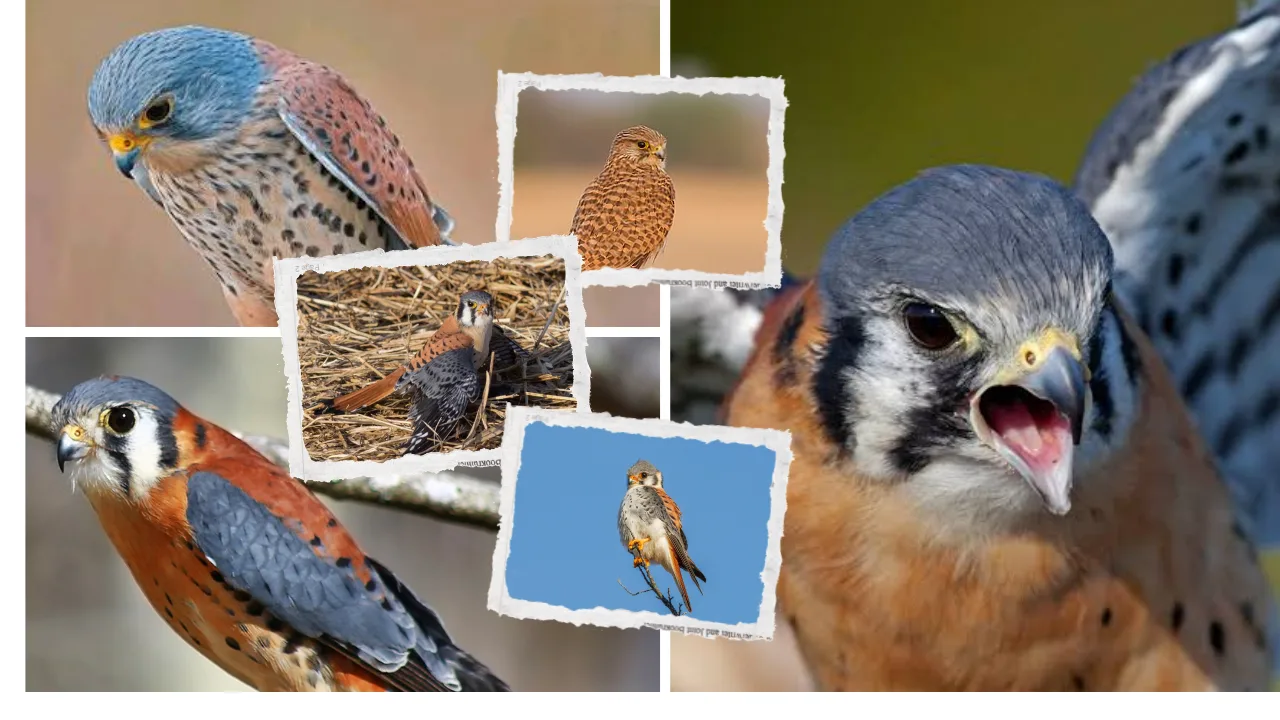
Common Kestrel
Falco tinnunculus
The Common Kestrel is one of the most familiar small falcons of open landscapes. It is often recognised by its characteristic hovering flight, holding almost motionless in the air while watching the ground for prey.
Habitat & Adaptation
Common Kestrels use open country, rocky slopes, cliffs and the edges of settlements, where clear views and elevated perches help them find prey. In the arid landscapes around Merzouga, observing these open areas from a distance can reveal their hunting behaviour without disturbing them.
Identification
Pointed wings, a long tail and dark-spotted underparts help identify the Common Kestrel. Adult males typically have a grey head and tail with a rusty-brown back; females are browner with barred upperparts and tail. Hovering while scanning the ground is characteristic, but plumage and shape should also be checked to distinguish it from similar falcons.
.9f2c9db1.webp)
Behaviour & Activity
Active mainly by day, the Common Kestrel scans the ground from perches or hovers in the air before dropping towards prey. Watching calmly from a respectful distance can reveal hunting and resting behaviour without disturbing the bird.
Wildlife Photography
For photographers, the Common Kestrel is best approached with patience and distance. Soft light and natural behaviour are more valuable than a close approach, especially in exposed desert habitat.
.65f08fbd.webp)
Responsible Guiding
During Birding Merzouga outings, suitable habitat for the Common Kestrel can be checked carefully using local knowledge while keeping disturbance to a minimum and respecting the bird’s natural behaviour.
Species Factsheet
Search for the Common Kestrel
Explore suitable habitats around Merzouga with Brahim as part of a focused and responsible birdwatching experience for the Common Kestrel and other desert species.