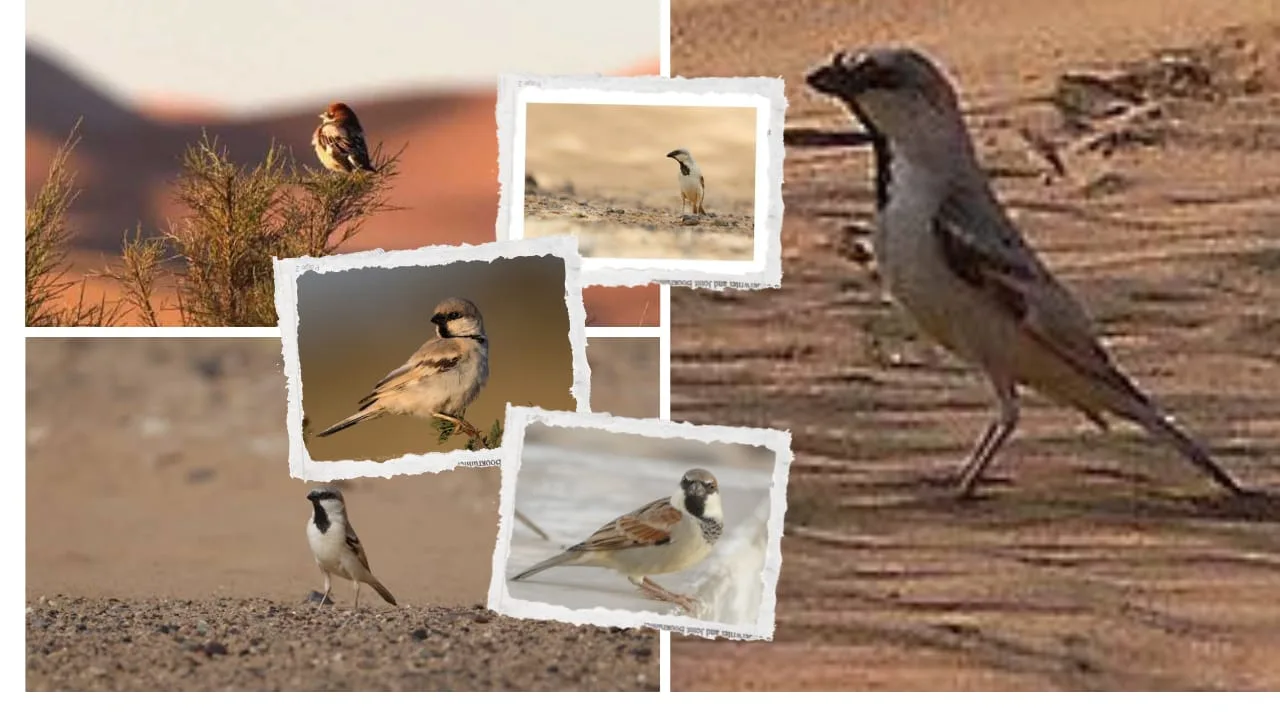
House Sparrow
Highly AdaptableCommon Resident
Passer domesticus
The House Sparrow is one of the world’s most familiar birds and is also a regular part of daily life around villages, gardens, palm groves, farms, and guesthouses in the Merzouga region. Its close association with people makes it easy to observe in many settled areas.
Key HabitatVillages, gardens, palm groves & farms
Key FeatureAdaptation to human environments
Living Alongside People
House Sparrows are strongly associated with human settlements. They use roofs, walls, buildings, and other sheltered structures for nesting and resting, taking advantage of suitable places around villages and farms.
A Flexible Diet
Their diet includes seeds, grains, small insects, and other available food. During the breeding season, adults also collect insects for their chicks. This flexible feeding behavior helps the species live successfully in many different environments.
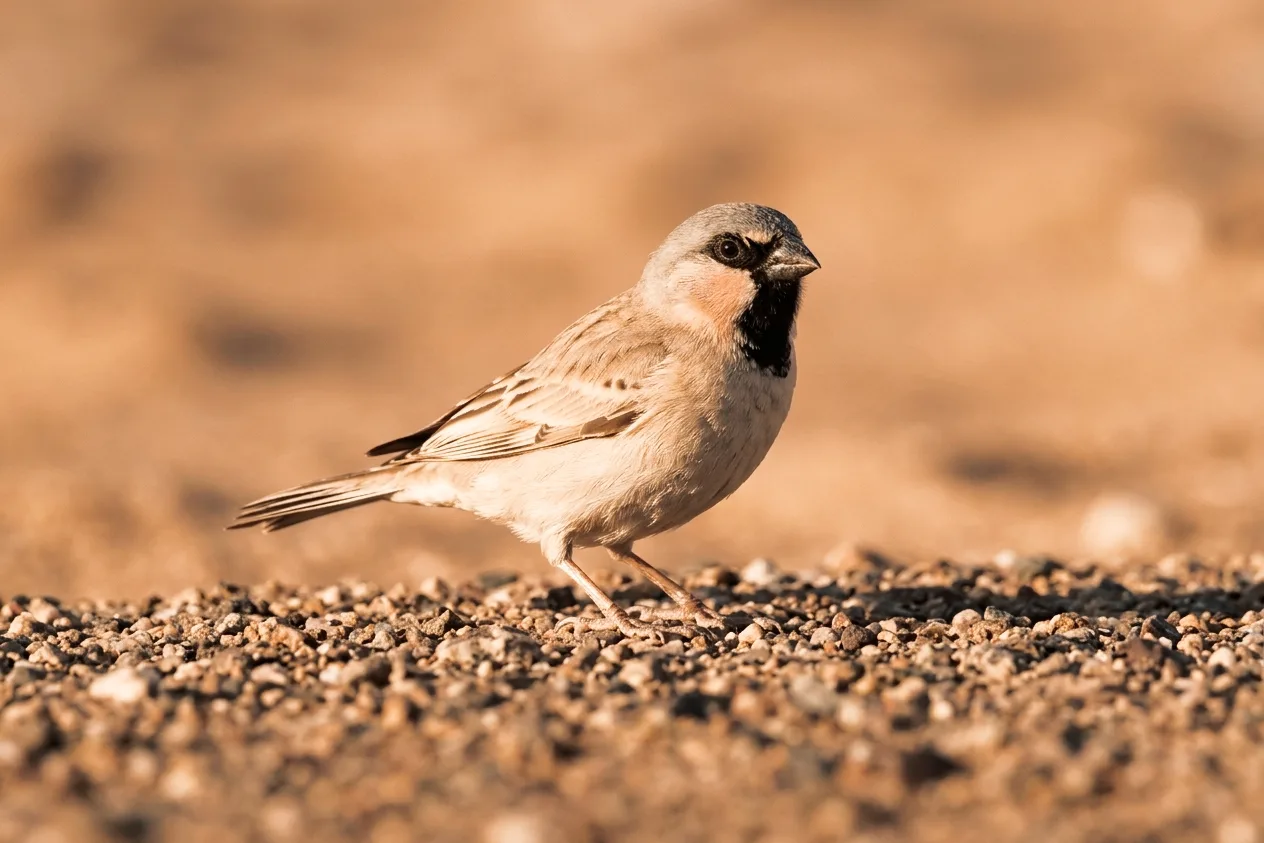
Social Behavior
House Sparrows are social birds and are often seen in small groups around feeding and resting areas. Their familiar calls and constant movement are a regular part of village, garden, and oasis environments.
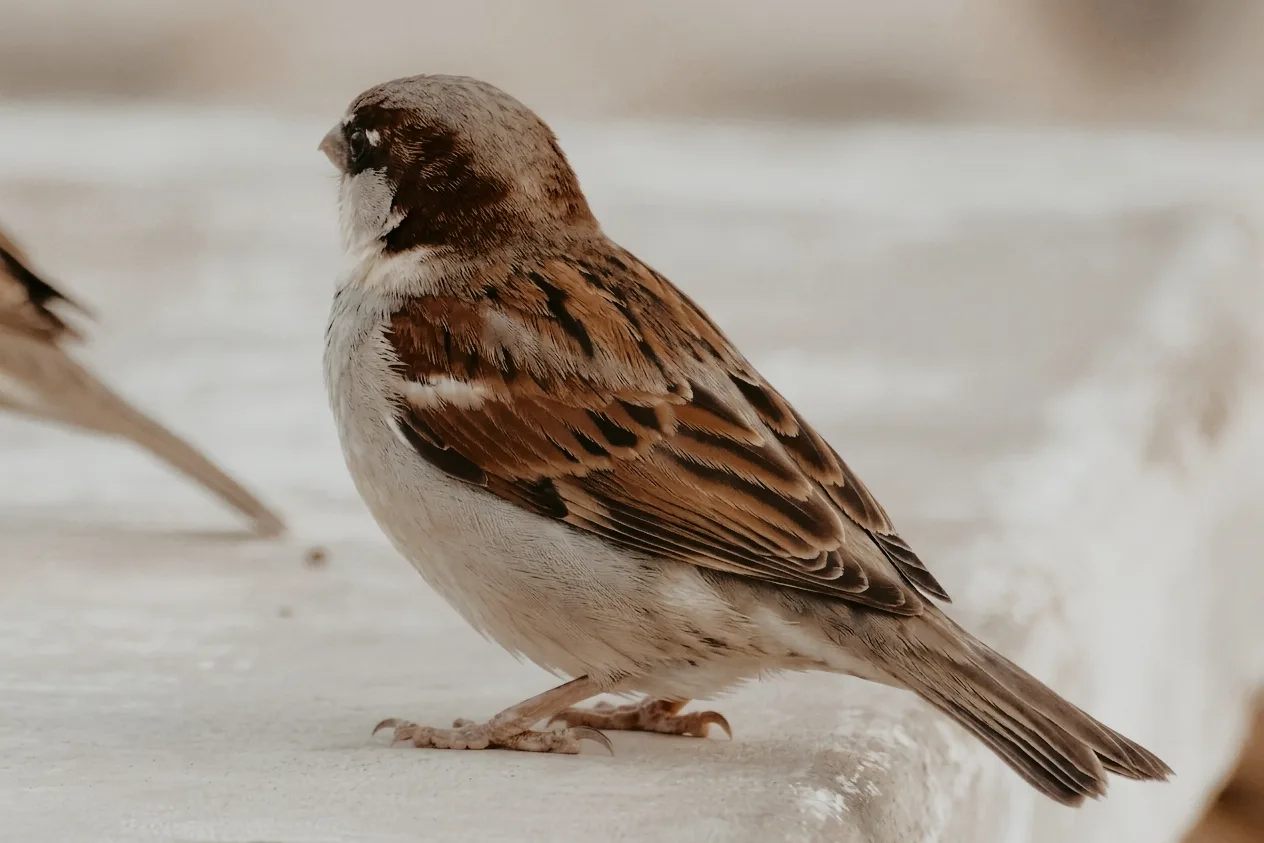
Wildlife Photography
Although common, the House Sparrow can still be an interesting subject for photography. Birds perched on traditional walls, near palm groves, or within village surroundings can help show the connection between everyday human environments and local birdlife.
Observation around Merzouga
During Birding Merzouga outings, House Sparrows may be observed around villages, gardens, palm groves, farms, and rural accommodation. Their familiarity makes them useful for noticing behavior, plumage differences, and the way common birds adapt to local conditions.
Not every birdwatching experience depends on rare species. Observing familiar birds such as the House Sparrow can also reveal how wildlife lives alongside people in the Moroccan desert.
Species Factsheet
Scientific NamePasser domesticus
Size Range14 - 16 cm
Primary DietSeeds, grains & small insects
Nesting HabitBuildings, roofs & wall cavities
Best Observation TimeMorning & afternoon
Conservation StatusLeast Concern
Local Birding Experience
Discover Birds around Merzouga
Explore the varied birdlife around villages, palm groves, gardens, and nearby desert habitats with Brahim as part of your Merzouga birdwatching experience. The House Sparrow is one of the familiar resident species that may be encountered along the way.