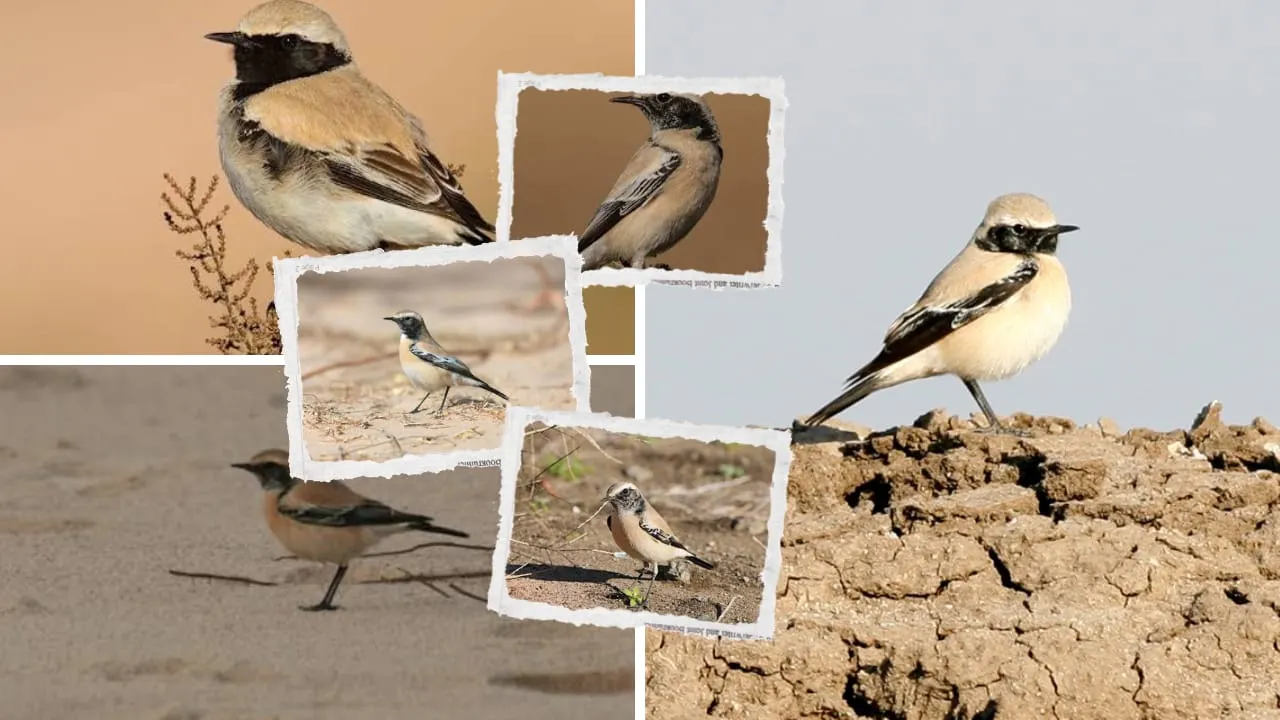
Desert Wheatear
Sahara Resident SpecialtyUncommon Desert Resident
Oenanthe deserti
A striking symbol of the Sahara's rich birdlife, the Desert Wheatear is perfectly adapted to life in one of the world's most challenging environments, easily recognized by its warm sandy plumage and distinctive black tail.
Key HabitatArid Plains & Dunes
Key FeatureBlack Face & Tail
Survival & Adaptation
The Desert Wheatear is one of the most characteristic birds of the Moroccan Sahara and a favorite species among birdwatchers exploring the landscapes around Merzouga. Easily recognized by its striking black face, warm sandy plumage, and distinctive black tail, this elegant bird is perfectly adapted to life in one of the world's most challenging environments. Whether perched on a rocky outcrop or darting across open desert ground, the Desert Wheatear is a true symbol of the Sahara's rich birdlife.
Incredible Camouflage
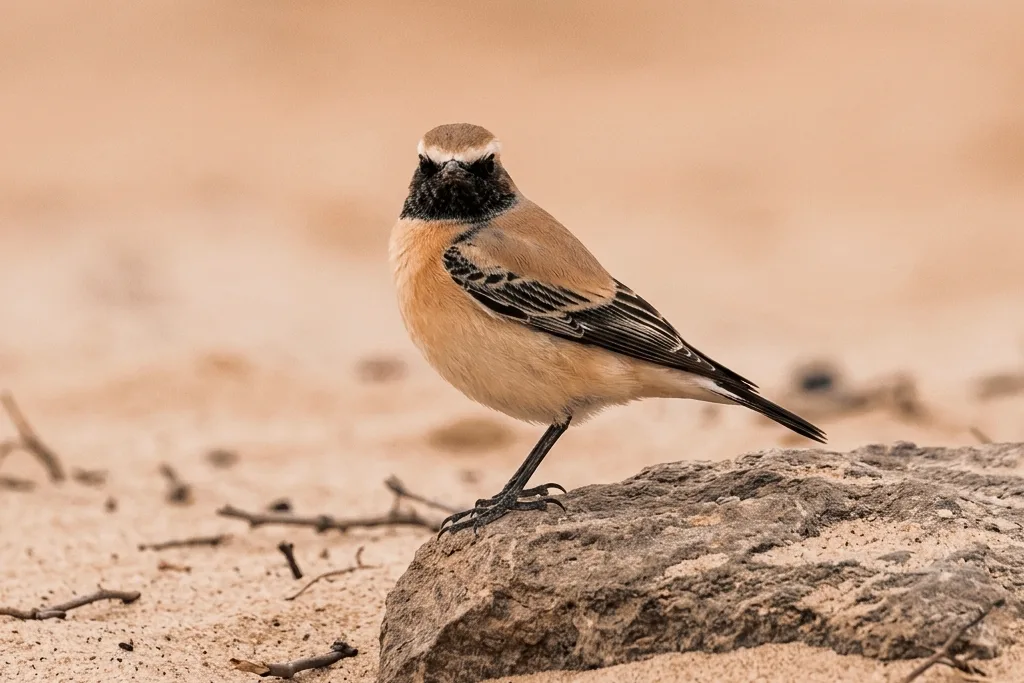
Unlike many small passerines, the Desert Wheatear thrives in open, arid habitats where vegetation is sparse and visibility is excellent. It is commonly found on rocky plains, gravel deserts, sand dunes, dry riverbeds, and desert plateaus, where it patiently watches for insects from low perches before making quick flights to capture its prey. Its natural camouflage allows it to blend beautifully with the golden colors of the surrounding landscape.
Behavior & Alertness
Active throughout the cooler hours of the day, the Desert Wheatear is frequently seen perched on rocks, shrubs, or small desert mounds, constantly scanning its surroundings. During the breeding season, males become especially territorial and perform short display flights while singing to defend their territory and attract a mate. Their bold behavior and frequent perching make them a rewarding desert bird to observe when encountered.
.2e33b44b.webp)
Wildlife Photography
For wildlife photographers, the Desert Wheatear can offer rewarding photographic opportunities. Its attractive plumage, contrasting facial markings, and habit of perching in open locations make it an ideal subject against the spectacular scenery of the Sahara. The warm light shortly after sunrise and before sunset can provide beautiful conditions for capturing detailed and colorful images in its natural habitat.
Responsible Guiding
During our Birding Merzouga tours, we regularly visit the habitats where Desert Wheatears are most commonly observed. Local knowledge, seasonal experience, and careful field observation help guide the search for this remarkable species while following responsible birdwatching practices that protect both the birds and their fragile desert ecosystem. Watching a Desert Wheatear in its natural habitat is far more than simply adding another species to your bird list; it is an opportunity to experience one of the Sahara's most iconic desert birds, admire its remarkable adaptations, and appreciate the incredible diversity of wildlife that makes the deserts of Merzouga one of Morocco's finest birdwatching destinations.
Species Factsheet
Scientific NameOenanthe deserti
Size Range14.5 - 15 cm
Primary DietInsects, spiders, larvae
Flight PatternLow darting flights
Best Observation TimeMorning & late afternoon
VulnerabilityLeast Concern
Desert Birding Experience
Search for the Desert Wheatear
Explore suitable desert habitats by 4x4 with Brahim as part of your Merzouga birdwatching experience, with a focus on the characteristic birdlife of the Sahara.