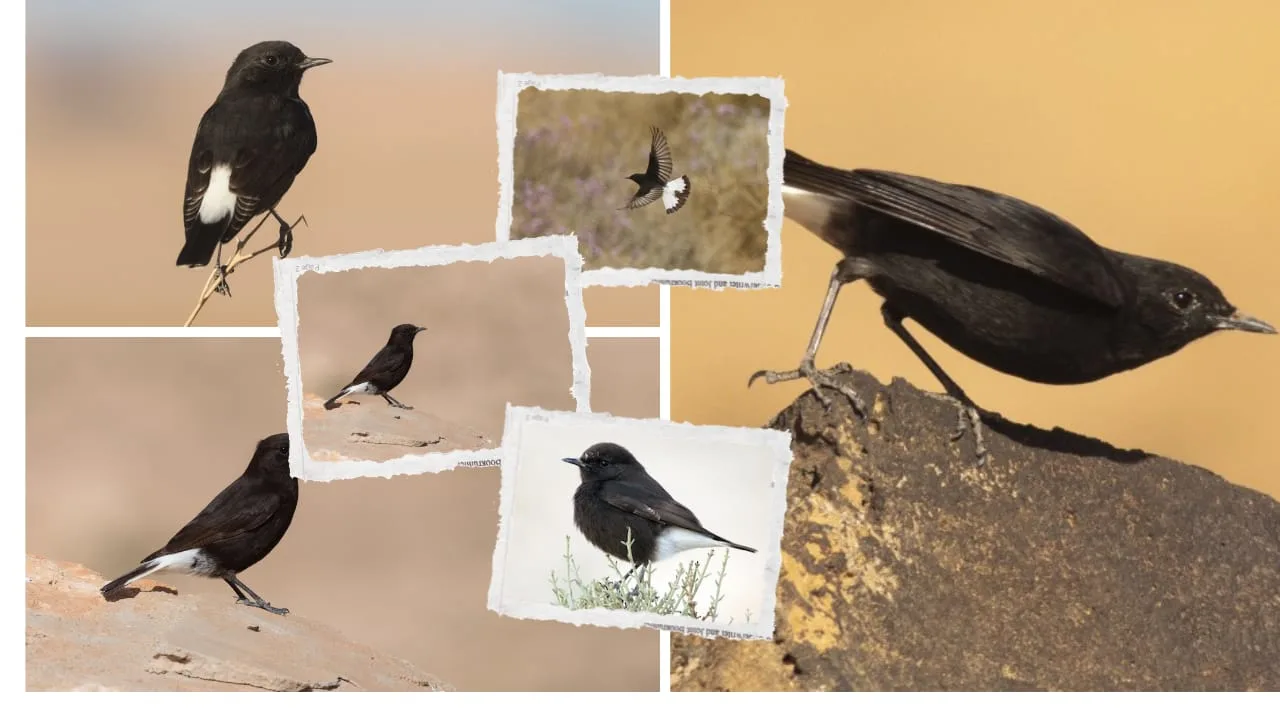
Black Wheatear
Rocky Habitat SpeciesDistinctive Resident
Oenanthe leucura
The Black Wheatear is a distinctive resident of Morocco’s rocky landscapes. Its dark plumage and contrasting white tail make it easy to recognize when it perches on rocks, walls, and other elevated points while scanning the surrounding ground.
Key HabitatRocky Slopes, Ruins & Dry Valleys
Key FeatureDark Plumage & White Tail
Life in Rocky Habitats
The Black Wheatear is closely associated with rocky, dry environments. It often moves between exposed perches and the ground while searching for insects, spiders, and other small invertebrates among stones, cracks, and sparse vegetation.
Stone-Carrying Nest Behavior
One of its best-known behaviors is carrying small stones near the nest. Black Wheatears may accumulate pebbles around nesting sites in rocky cavities and crevices, making this a distinctive feature of their breeding behavior.
Territory & Breeding Season
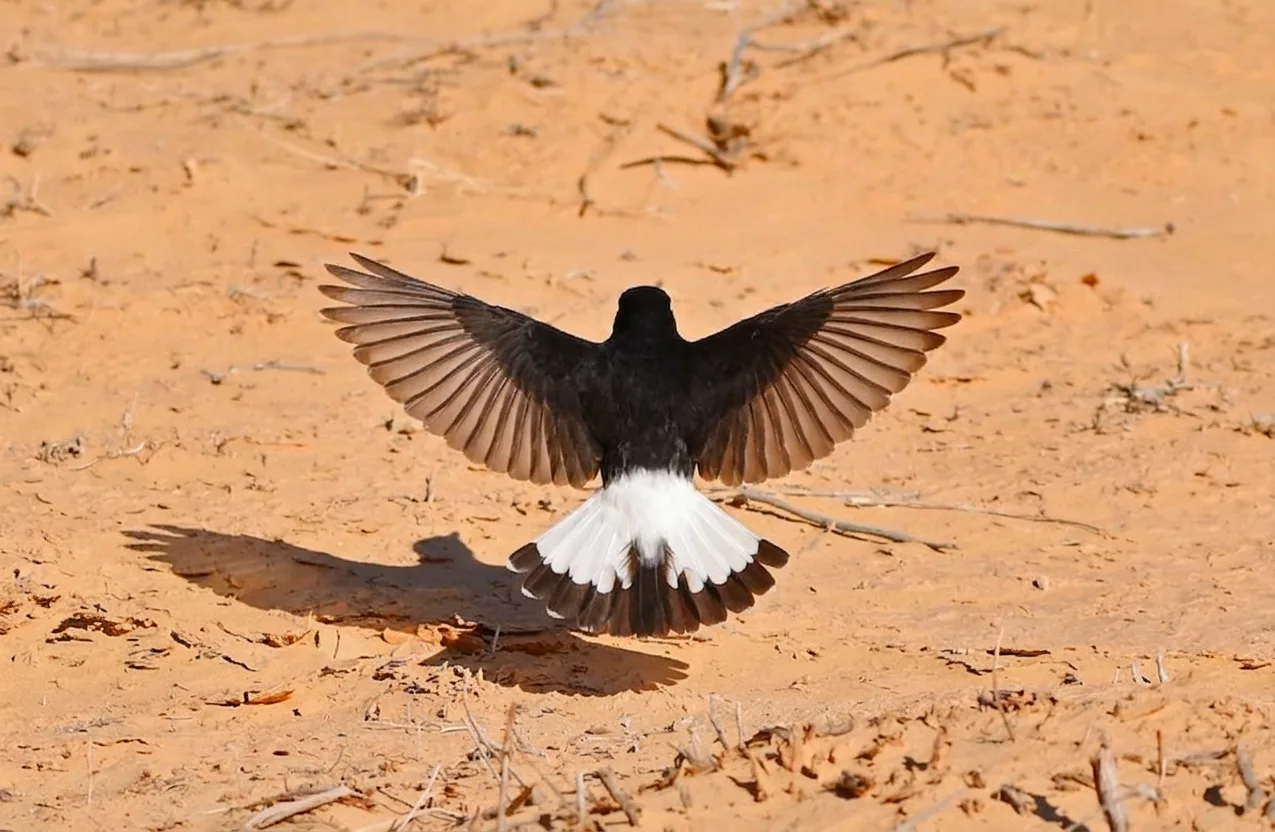
During the breeding season, males become more vocal and territorial, often using prominent rocky perches. Their calls, songs, and movements between exposed viewpoints can help birdwatchers locate them in suitable habitat.
Wildlife Photography
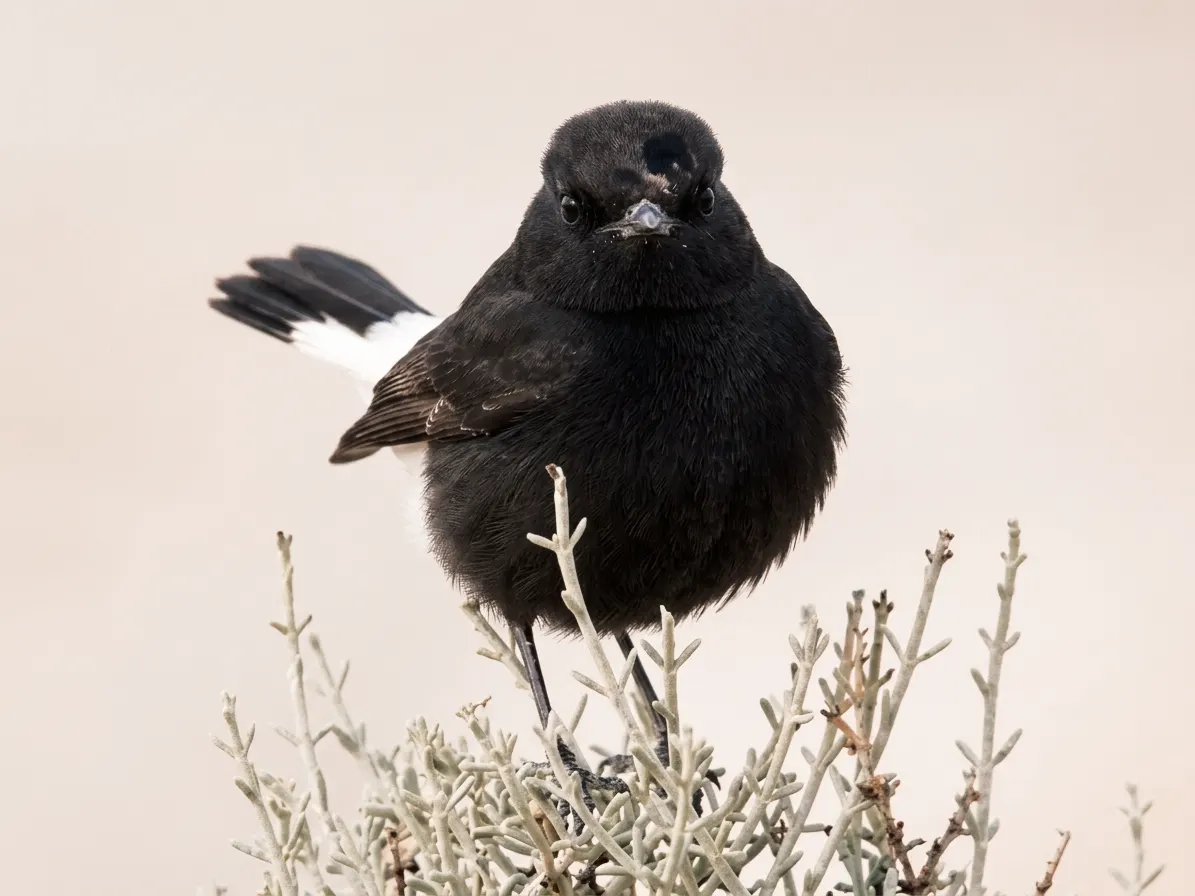
For wildlife photographers, the strong contrast between the bird’s dark plumage, white tail, and pale rocky surroundings can create striking images. Morning and late-afternoon light can be especially useful for revealing plumage detail and the character of its habitat.
Observation around Merzouga
During Birding Merzouga outings, we explore suitable rocky hills, dry valleys, outcrops, and traditional structures where Black Wheatears may occur. Local knowledge, seasonal conditions, and current bird activity help guide the search while respecting the birds and their habitat. Seeing a Black Wheatear in its natural environment adds another dimension to birdwatching around Merzouga, showing how species adapted to rocky ground complement the birds of dunes, scrub, wetlands, and open desert.
Species Factsheet
Scientific NameOenanthe leucura
Size Range16–18 cm
Primary DietInsects, Spiders & Small Invertebrates
Notable BehaviorCarries Stones near Nesting Areas
Best Observation TimeDaylight Hours; Often Visible from Rocky Perches
Conservation StatusLeast Concern
Rocky Habitat Birding
Search for the Black Wheatear
Explore suitable rocky plateaus, dry valleys, and traditional desert structures with Brahim as part of your birdwatching experience around Merzouga, with a focus on the Black Wheatear and other birds of rocky habitats.